
Most years, our conversations with clients at the end of the summer follow a similar pattern. Ecommerce brands want to know whether their plans for Black Friday and Christmas still make sense, professional services firms are thinking about budgets for the new year, and charities are preparing for the period when many people are most inclined to give. This year, those conversations have also kept returning to how much the ground has moved since the spring, particularly in search.
This post is our attempt to gather the changes we think are most worth knowing about as we head into the last quarter of 2026. It isn't a complete list, and some of what follows is still settling, so we've tried to be clear about where things are uncertain. We've focused on what seems most relevant to the organisations we work with, which are mostly start-ups and mid-sized, purpose-led organisations, rather than on everything announced in the industry.
Search is becoming more conversational
AI Mode, Google's chat-style search experience, has been available in the UK since July 2025, appearing as a separate tab on the results page and in the Google app. At its I/O conference in May this year, Google announced a set of changes that bring it much closer to everyday searching. The search box itself has been redesigned to accept longer questions, as well as images, files and videos, and people can now ask a follow-up question directly from an AI Overview and carry on the conversation in AI Mode. Google says AI Mode now has more than a billion monthly users worldwide, although it doesn't break that figure down by country.
Some of the more ambitious announcements, such as agents that monitor the web for you in the background, or Search booking local services on your behalf, are starting in the US and with paid subscribers. We don't know when, or whether, they will reach UK searchers, so we would treat them as something to keep an eye on rather than plan around. Agentic restaurant booking did arrive in the UK in April, which suggests some of these features will follow eventually.
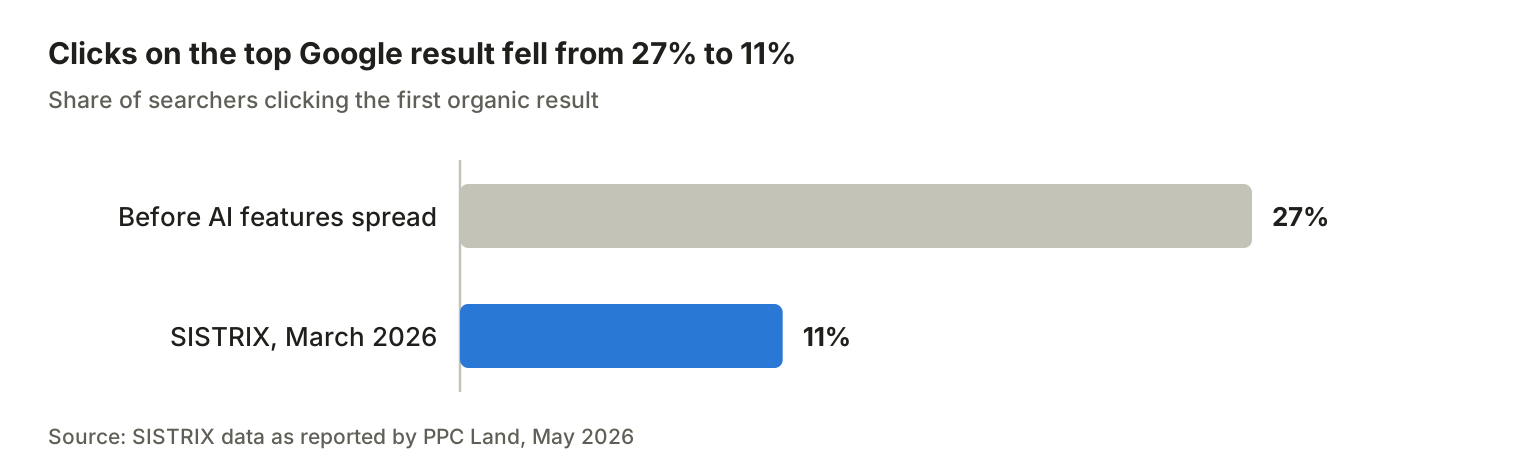
What this means in practice is still unclear, and we would be wary of anyone who claims to know exactly. The broad direction seems fairly settled, though. More questions are being answered on Google's own pages, and the people who do click through may well arrive having already compared options in a conversation with the AI. It seems likely that this will mean fewer visits from search, but visitors who are further along in their thinking. Data from SISTRIX, reported by PPC Land in May, suggested the click-through rate for the top organic result had fallen from 27% to 11% as these features spread. Figures like this vary a lot between sectors and types of search, so we would treat it as a sign of direction rather than a forecast for any one website.
There is also some UK-specific news here. In June, the CMA used its new powers under the Digital Markets, Competition and Consumers Act to require Google to let publishers opt out of their content being used in AI Overviews and similar features, without having to block Google from crawling their site altogether. Google must also link clearly to the sources it uses in AI-generated answers. It has nine months to put these changes in place, so they should arrive by early 2027, with some parts expected sooner. For most of the organisations we work with, opting out probably won't make sense, since being cited in these answers is increasingly how people come across you. It may still be worth understanding the option, particularly for charities and firms whose published research and guidance is a big part of what they offer.
Paid media is changing shape too
The most immediate change for anyone running Google Ads is happening this month. Google announced in April that Dynamic Search Ads, which build ads automatically from the content of your website, are being retired. From September, eligible campaigns using them, along with campaigns using automatically created assets or the campaign-level broad match setting, are due to be moved over to AI Max for Search, and new Dynamic Search Ads campaigns can no longer be created. Google expects the move to be finished by the end of the month. If you haven't looked at your account recently, it may be worth checking what has changed before the busy weeks begin, since settings that used to be off can now be on by default.
AI Max matters partly because it is one of the routes into Google's AI search features. In the US, ads have been appearing inside AI Mode for some time, drawn automatically from Performance Max, Shopping and broad match campaigns, with no separate reporting and no way to opt out. As far as we know, that hasn't reached the UK yet, and Google hasn't given a date. Adthena, which tracks search advertising, found in August that Google rarely shows the same assembled headline twice in AI Mode, piecing ads together from an advertiser's headline options to suit each conversation. For start-ups and mid-sized brands, that suggests the quality and variety of the headlines you give Google is going to matter more than it used to.
The other development worth knowing about is advertising in ChatGPT. OpenAI started testing ads in the US in February and expanded the pilot to the UK in June, making it the first European market. The ads appear below ChatGPT's answers, are labelled as sponsored, and are only shown to people using the free and lower-cost Go plans. OpenAI says ads don't influence the answers themselves. Access for UK businesses has been opening up through a self-serve beta, but it is early days, and we don't yet have much evidence of how it performs for start-ups or mid-sized brands. Our honest view is that it is probably worth watching rather than diverting money to over the next few months, unless you have budget set aside specifically for testing.
As far as we know, there isn't a sandbox or test mode of the kind some ad platforms offer. The nearest thing is the Ads Manager beta itself. When OpenAI began rolling it out to UK businesses in June, it let them create an account and explore the campaign tools without adding billing details first, which is a fairly low-risk way to see how campaigns are put together before any money is committed. OpenAI has also asked agencies not to set up accounts on behalf of clients. Instead, each business opens its own account and invites its agency in, so it is worth getting that right from the start. Access has been rolling out gradually, businesses need to pass OpenAI's verification and be in an eligible category, and there are no published UK benchmarks for costs or results yet.
For brands that do want to try it, the approach that seems most sensible to us is a small, ring-fenced budget treated as a way of learning rather than as performance spend, a clear idea beforehand of what would count as a good result, and enough time to judge it. Adtrak, for example, suggests running a test for at least 60 days before drawing conclusions. Because ads are only shown to people on the free and Go plans, it is also worth thinking about whether your customers or supporters are likely to be among them. Alongside any paid test, it costs nothing to ask ChatGPT the questions your customers would ask and see whether, and how, you appear in the answers. That tells you something useful whether or not you ever run an ad.
The CMA is now enforcing consumer law directly
Since April 2025, the CMA has been able to decide for itself whether a business has broken consumer law and to fine it up to 10% of global turnover, without going to court first. For a while that could feel fairly abstract, but this year the CMA has started to use those powers. In April, the CMA fined the AA £4.2 million for drip pricing on driving lesson bookings, where a mandatory booking fee wasn't included in the price shown at the start, and ordered £760,000 in refunds. In June it fined StubHub close to £900,000 over ticket fees added at checkout, and fined Marks Electrical £720,000 for automatically opting customers in to paid extras. In each case the fine had already been reduced by 40% because the business settled early.
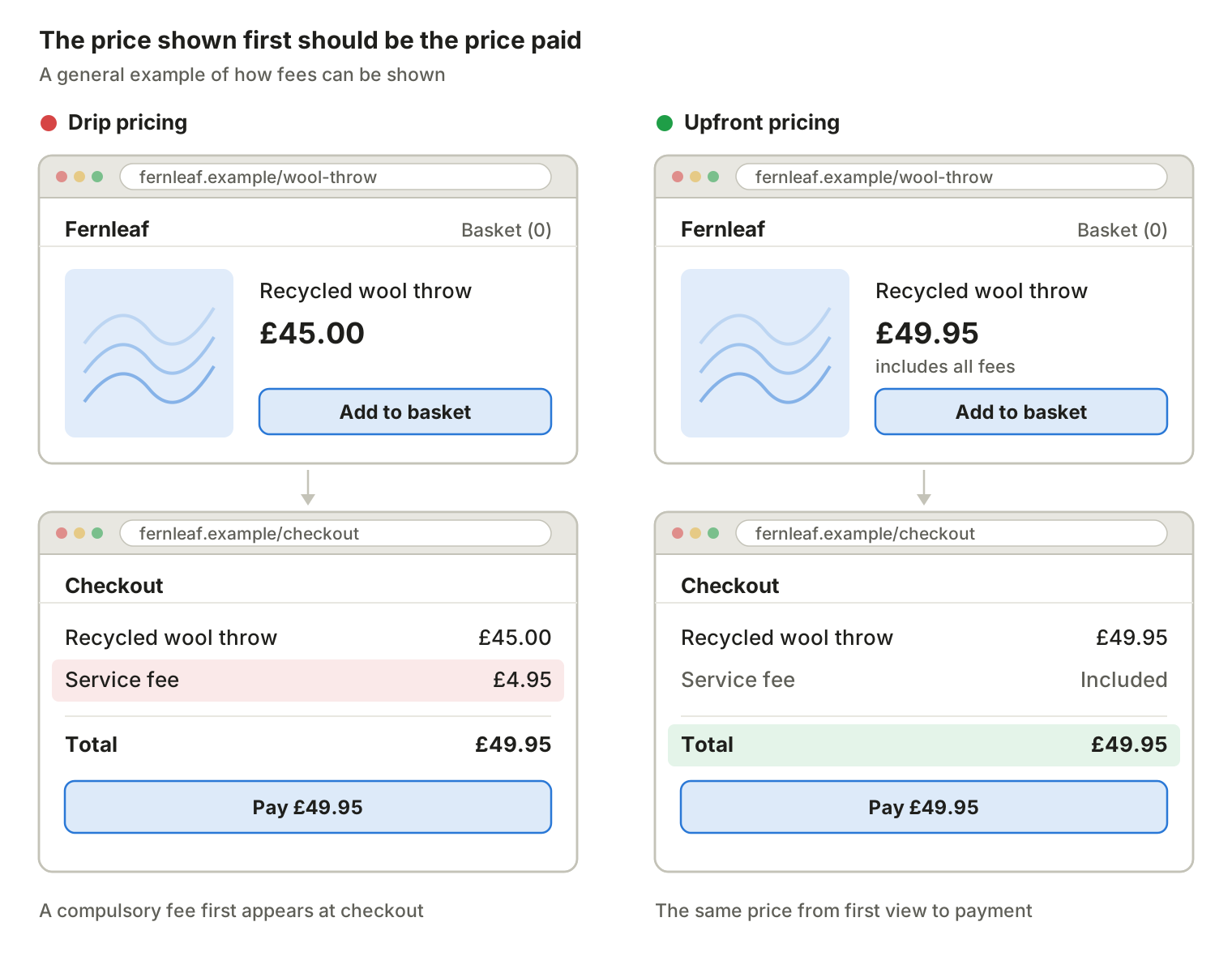
The CMA's attention has been on a fairly consistent set of practices: prices that don't include unavoidable fees, fake or misleading reviews, extras added by default, and sales tactics that create false urgency. In March it opened investigations into five businesses over reviews, including Just Eat's star ratings and Pasta Evangelists, which is alleged to have offered discounts in exchange for five-star reviews without disclosing it. In May, Emma Sleep agreed through the High Court to stop using misleading countdown timers, false high-demand messages and "limited time" offers that weren't really limited.
These are mostly larger companies, but the practices themselves are common in ecommerce, and especially around Black Friday. Countdown timers, "only 3 left" messages, was-and-now pricing and incentivised reviews are just as easy to find on the sites of start-ups and mid-sized brands, and are sometimes switched on by an app or plugin without anyone deciding to use them. It may be worth looking at your checkout and promotions with fresh eyes before November.
Green claims sit within the same regime. The CMA's Green Claims Code has been in place since 2021, and earlier this year the CMA published a short explainer that put particular weight on businesses taking responsibility for claims about their supply chains. For brands that are B Corps or working towards it, this is probably the area that deserves most care. The claims that seem most likely to cause trouble are often the well-intentioned ones that have outrun the evidence behind them, such as calling a product sustainable or carbon neutral when only part of its lifecycle has been looked at.
Shoppers and donors are more selective
Black Friday falls on 27 November this year, with GivingTuesday the following week on 1 December. Forecasts for this year's peak won't arrive until later in the autumn, but last year's figures give a useful sense of the mood. PwC forecast that UK Black Friday spending in 2025 would reach £6.4 billion, only slightly up on the year before, even though the share of people planning to take part had fallen from 53% to 46%. Those who did take part were expected to spend more each. Among people who weren't planning to shop, the most common reason was simply that there was nothing they needed or wanted.
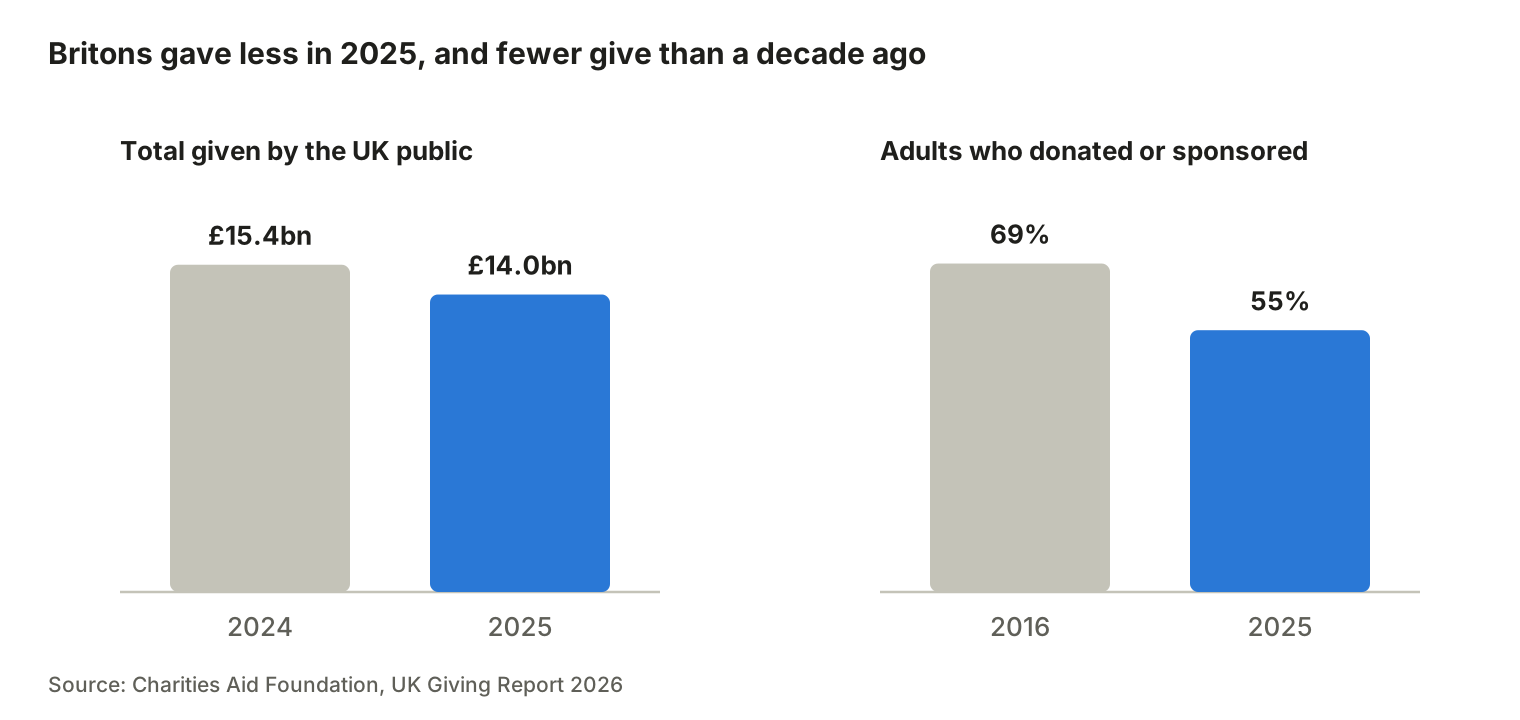
Charitable giving is under pressure too, although the pattern is a little different. The Charities Aid Foundation's UK Giving Report, published in March, estimated that the British public gave £14 billion in 2025, down from £15.4 billion in 2024 and the first fall since 2021. The share of people giving held at 55%, but average donations fell, and CAF estimates there are around six million fewer donors than a decade ago. Affordability was the main reason people gave for not donating.
For charities, this probably makes the end of the year more important rather than less, and it may be worth thinking carefully about how you look after the supporters you already have, alongside finding new ones. For ecommerce brands, it suggests that discounting harder isn't the only lever, and that being clear about why something is worth buying may carry further with people who are already wary of sales events.
A few places to start
If you run Google Ads, it is worth logging in early this month to see which campaigns are due to move to AI Max, and then checking what the move has switched on once it happens. It is a much easier conversation to have in September than in the middle of November, when there is little room to test anything.
On the search side, it may help to look at the questions people actually ask before they choose a product, a firm or a charity to support, and whether your website answers them plainly. AI answers tend to draw on pages that explain things clearly and specifically, and in our view that is a better use of time than chasing any particular tactic. It is also worth searching for your own organisation and your main services in AI Mode and ChatGPT to see how you are described, since what comes back isn't always accurate.
Before any promotions go live, we would suggest walking through your own checkout as a customer would, looking at whether the price shown first is the price paid, whether timers and stock messages are genuine, and whether any reviews were collected in return for something. If you make environmental claims, it is worth checking each one against the evidence you could show if asked.
None of this is especially new, and we don't think the end of the year calls for a change of direction for most organisations. Much of what is changing will take months to settle, and we will keep writing about it as it does. If any of it raises questions for your own organisation, we are always happy to talk it through.
Sources
Search Engine Land, "Google releases AI Mode in the UK", July 2025. https://searchengineland.com/google-releases-ai-mode-in-the-uk-459611
Luis Rijo, "Google Search gets agents, a new search box, and Gemini 3.5 at I/O 2026", PPC Land, 20 May 2026 (also the source of the SISTRIX click-through figures). https://ppc.land/google-search-gets-agents-a-new-search-box-and-gemini-3-5-at-i-o-2026/
Colin Mann, "CMA imposes Google publisher AI opt-out", Advanced Television, 3 June 2026. https://www.advanced-television.com/2026/06/03/cma-imposes-google-publisher-ai-opt-out/
Competition and Markets Authority, "CMA proposes package of measures to improve Google search services in UK", GOV.UK, 28 January 2026. https://www.gov.uk/government/news/cma-proposes-package-of-measures-to-improve-google-search-services-in-uk
Google, "We're upgrading Dynamic Search Ads to AI Max", Google Ads and Commerce Blog, 15 April 2026. https://blog.google/products/ads-commerce/dsa-upgrade-to-ai-max-2026/
Joss Froggatt, "Google AI Mode ads: Google is rebuilding your search ads for every conversation", Adthena, 26 August 2026. https://www.adthena.com/resources/blog/google-ai-mode-ads/
OpenAI, "Testing ads in ChatGPT", first published 9 February 2026, updated 11 August 2026. https://openai.com/index/testing-ads-in-chatgpt/
PPC Land, "ChatGPT ads go live in the UK as OpenAI expands pilot beyond US", June 2026. https://ppc.land/chatgpt-ads-go-live-in-the-uk-as-openai-expands-pilot-beyond-us/
Anu Adegbola, "OpenAI opens ChatGPT Ads Manager beta to UK advertisers", Search Engine Land, 19 June 2026. https://searchengineland.com/openai-opens-chatgpt-ads-manager-beta-to-uk-advertisers-480679
Andy Norton, "ChatGPT Ads in the UK: What's Actually Live, and How to Test It Properly", Adtrak, 2026. https://www.adtrak.co.uk/blog/chatgpt-ads-in-the-uk-whats-actually-live-and-how-to-test-it-properly
Debbie Heywood, "CMA consumer protection enforcement in 2026: the CMA flexes its new powers", Winston Taylor, 23 June 2026. https://www.winstontaylor.com/insights/cma-consumer-protection-enforcement-in-2026-the-cma-flexes-its-new-powers
Osborne Clarke, "Consumer law: UK Regulatory Outlook February 2026", 26 February 2026. https://www.osborneclarke.com/insights/regulatory-outlook-february-2026-consumer-law
PwC UK, "Nearly half of consumers in NI sent to splurge during Black Friday weekend", press release, 21 November 2025. https://www.pwc.co.uk/press-room/press-releases/regions/nearly-half-of-consumers-in-ni-sent-to-splurge-during-black-frid.html
George Hayes, "Charitable giving from Brits fell by 10% to £14bn last year, CAF estimates", Civil Society, 16 March 2026. https://www.civilsociety.co.uk/news/charitable-giving-from-brits-fell-by-10-to-14bn-last-year-caf-estimates.html
Charities Aid Foundation, UK Giving Report 2026, March 2026. https://www.cafonline.org/ukgiving2026