
Over the past few months we've noticed a small change on the accounts of some of the illustrators, photographers, writers and other creators we follow. More of them are signing off their posts by asking people to join a mailing list or visit their website, and a few have said plainly that they'll be posting less, or stopping altogether, because they don't want their work used to train AI models. More broadly, it feels as though people in general are starting to look for the next places to spend time and find new things, somewhere a little further away from AI. That has prompted a good deal of conversation, and it raises a bigger question than where audiences will find any one brand or creator. If fewer artists and creators share their work on the big platforms, we're curious who will end up setting the cultural trends that shape what people see and hear next, and what comes to resonate with them.
Why some artists and creators are stepping back
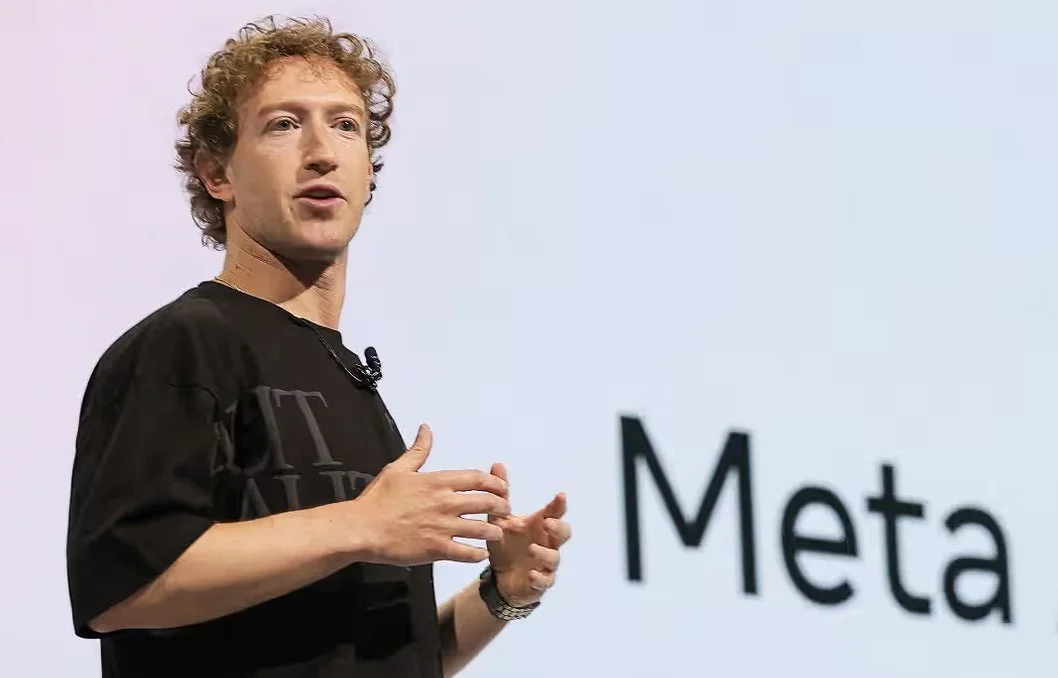
The unease has been building for a while. In June 2024, Meta told users in the UK and Europe that their public posts on Instagram and Facebook would be used to train its AI from 26 June. Many visual artists responded by moving to Cara, a portfolio app set up by the photographer Jingna Zhang, which bans AI-generated images and doesn't allow its content to be used for training. It reportedly gained around 600,000 users in a single week. Visual artists have been the most vocal, but we see similar worries come up among photographers, writers, musicians and other creators who make a living from what they share online.
Source: The Guardian
In the UK the same question has been working its way through policy. The government's consultation on copyright and AI, which ran from December 2024 to February 2025, drew more than 11,500 responses, and 88% of respondents said licences should be required whenever copyright work is used to train AI models. In March 2026 the government published its report and stepped back from its preferred option, a broad exception that would have allowed developers to train on work unless the rights holder opted out. As far as we understand it, nothing has replaced that proposal yet, and ministers have said they want to gather more evidence. For an individual artist or creator, the position remains unclear.
The gap that opens up
From a marketing point of view, what strikes us is what happens after a creator leaves. A website and a newsletter are good places to keep an audience you already have. They are much harder places to find a new one. Social platforms, whatever their faults, did the work of putting someone's work in front of strangers, and without that something else has to do the introducing.
One answer seems to be physical, local space. Open studios and art trails have been growing steadily in many parts of the country. Cheltenham Open Studios reported more than 10,000 visitors to the work of over 200 artists at its previous event, and farOpen, a volunteer network in the Forest of Dean and along the Severn and Wye, had 157 artist members in 2025, having only started in 2017. We can't claim these numbers are a response to AI, as much of the growth predates it. The habit of going to see art in person is alive, and people turn up. Gigs, makers' markets, readings and supper clubs seem to play a similar part for other kinds of creators.
If more work lives offline or behind a sign-up, culture may become a little less visible and a little more local. Finding someone good would depend more on being in the right room, or knowing someone who was, and less on what a platform decides to show you. We find that appealing, although we're aware it's easy to romanticise. Smaller, less visible scenes have always been easier for some people to reach than others, and that's worth keeping in mind. Accessibility and privilege becomes an issue, with busier, urban areas gaining more of an advantage that social media flattened out.
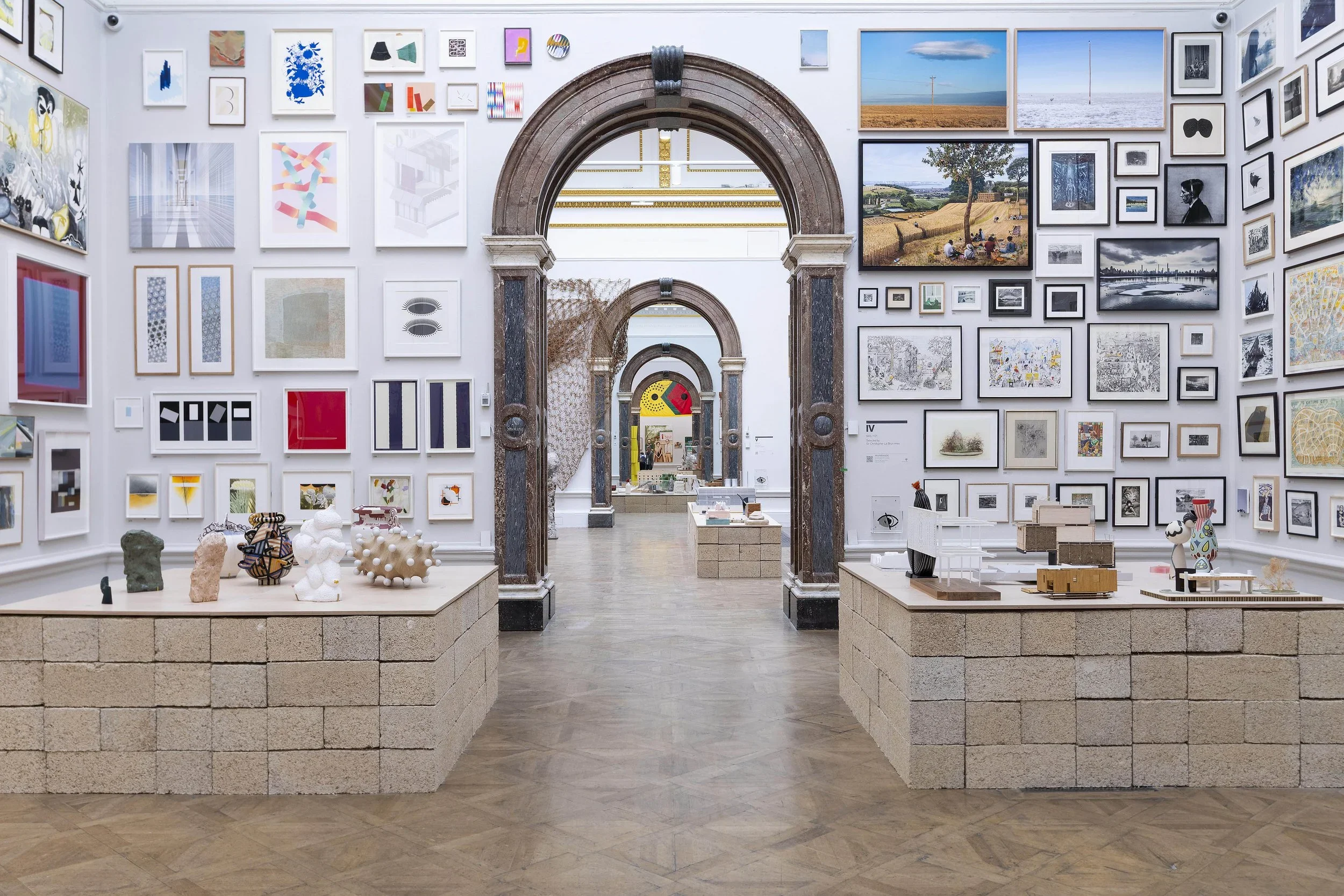
Gallery view of the Summer Exhibition 2025, at the Royal Academy of Arts, London, 17 June - 17 August 2025. Photo: © Royal Academy of Arts, London / David Parry.
Where people may go looking instead
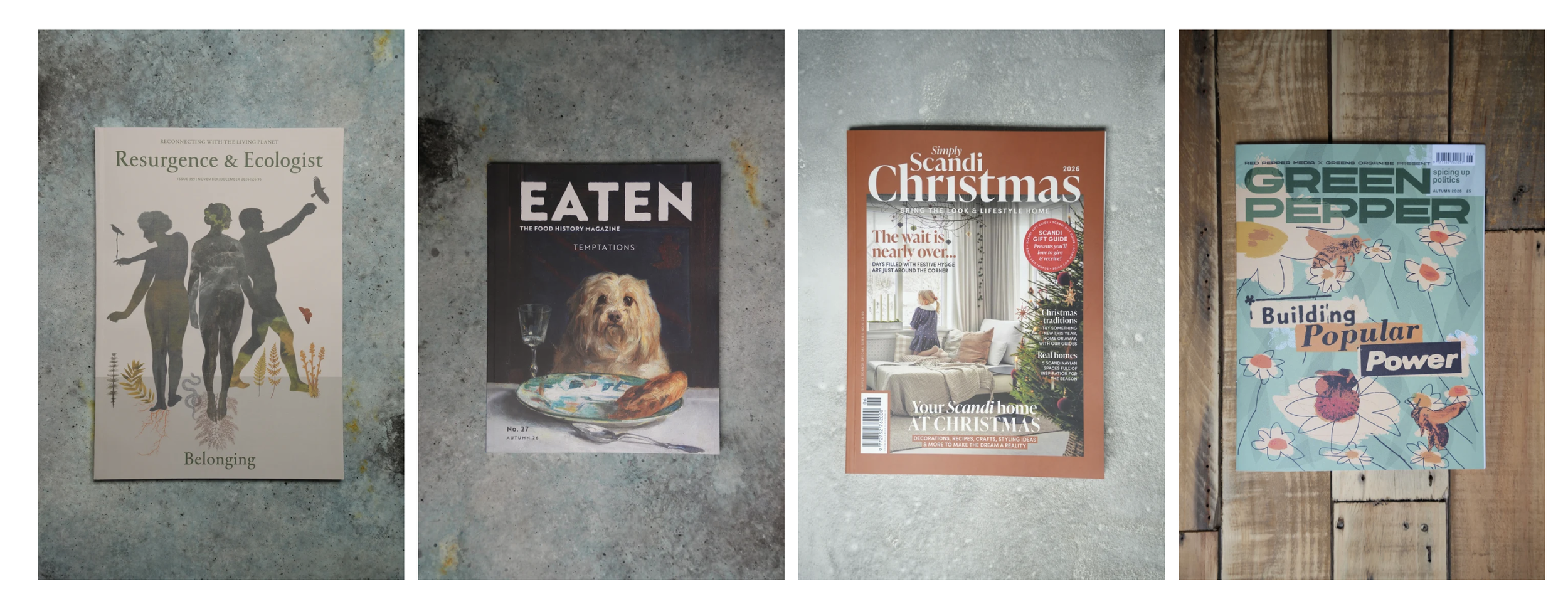
If discovery moves away from feeds, we think editorial spaces are likely to pick up some of the role. By that we mean magazines, local papers, newsletters and curated online collections, run by people whose job is to choose. There are signs this is already under way. Mass-market print is having a hard time: according to Press Gazette, only ten of the 131 ABC-audited UK magazines grew their sales in 2025. At the same time, Jeremy Leslie, who runs the independent magazine shop magCulture in London, has told The Guardian he has seen significant growth in interest in both making and buying independent titles.
The part we find most interesting is how these spaces might handle rights. A publication that wants to feature artists and creators who've left social media will probably need to agree in advance how the work can be used. That might cover whether it can be reproduced online, whether the publisher's website blocks AI crawlers, and how long permission lasts. Being clear about those terms could become part of what makes a curated space trustworthy to the people whose work it features, and we'd expect the more careful publications to start saying so openly.
Source: Pics & Ink
What this might mean for brands
Most of our clients aren't artists or creators, and plenty of them rarely work with one directly. All of them, though, are affected by what people come to find appealing and worth their attention, and creative people have often been the first to shape that. What follows is offered tentatively, as things we're thinking about rather than conclusions.
In our experience it helps to think of artists and creators less as suppliers of work and more as early signals of where taste is heading. The look of a new wave of packaging, or the tone that starts to feel right in a fundraising appeal, can often be traced back to work a small number of people saw first, in a studio, a zine, a small gallery or a niche newsletter, well before it reached anyone's brand guidelines. While that work was on Instagram, anyone could watch a trend forming. If more of it moves offline or behind a sign-up, the people who notice it early will be the ones who spend time in those spaces, and organisations that take their cues from what's trending online may find themselves further behind than they're used to.
The same shift may matter for reach more generally. If curated and editorial spaces become more important for discovery, then coverage in independent titles, local press and well-regarded newsletters may be worth more than it has been for some time.
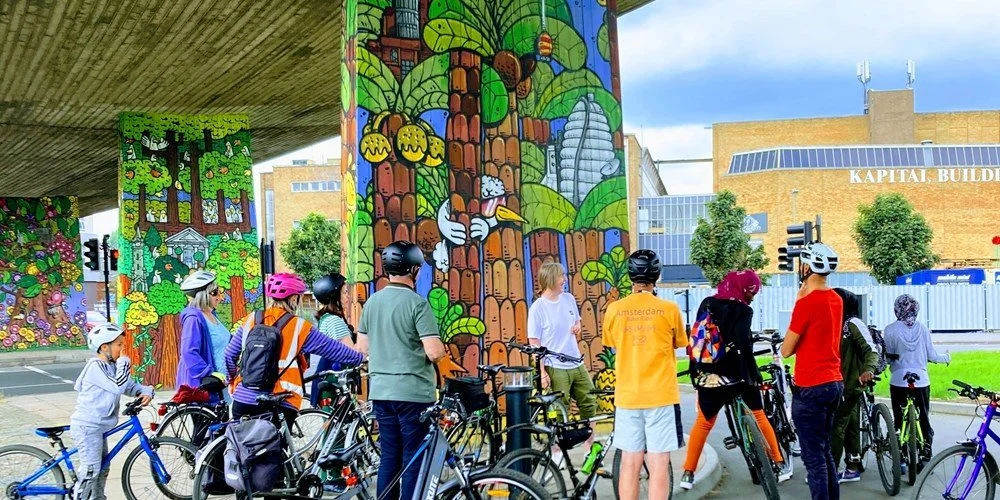
Supporting an open studios weekend or an art trail can be a genuine way to be part of a community, as long as it fits what you do and isn't just a logo exercise. Carshalton Artists, who run one of the larger open studios in south London, say local sponsors have been critical to making their event happen.
We should also say that we don't expect social media to fade away. If the platforms notice large numbers of creators leaving, our sense is that they're more likely to tighten their own approach to AI than let those people go, and there's some precedent for that already. In June 2024, after the Information Commissioner's Office raised concerns on behalf of UK users, Meta paused its plans to train AI on UK Facebook and Instagram posts. When it resumed that September, the ICO noted that Meta had made it simpler for people to object. LinkedIn suspended AI training on UK users' data the same month, again after talking to the ICO. So we see these quieter, curated spaces growing alongside social media, with people moving between the two.
What may matter most is regulation. Whether people feel safe putting their work in the hands of tech companies depends a great deal on what the law says those companies can and can't do with it, and in the UK that is still being worked out. Until it's clearer, we'd expect many creators to keep one foot on the platforms and the other somewhere they have more control.
A few places to start
If any of this resonates, it may be worth looking at where your audience actually comes across new things, beyond the platforms you post on. Asking a handful of customers or supporters directly is often more useful than any report. It's also worth looking for independent titles or newsletters in your sector that you could build a relationship with over time, and for a local event where your presence would be welcome rather than intrusive. It may also be worth someone in your team spending a little time where new work is actually shown, at a local open studios weekend or browsing the independent titles, simply to see what's emerging before it's everywhere.
Source: Leicester City Council: Open Streets Mini Festival
Sources
Creative Bloq (2024) "What is Cara, the Instagram alternative that gained 600k users in a week?", Creative Bloq, June 2024.
The Washington Post (2024) "Artists flee Instagram for new app Cara in protest of Meta AI scraping", The Washington Post, Technology section, 6 June 2024.
Fast Company (2024) "What is the Cara app, and why are artists deleting Instagram for it?", Fast Company, June 2024.
Simmons & Simmons (2026) "AI and copyright in the UK: where are we now and what is to come?", Simmons & Simmons publications.
UK Government (2026) Report on Copyright and Artificial Intelligence, published 18 March 2026, GOV.UK; summarised in IRIS Merlin, European Audiovisual Observatory (Council of Europe), "United Kingdom", article 10548.
Mondaq (2026) "UK Government report on copyright and AI concludes more evidence is needed, although s93 CDPA could go", Mondaq UK, New Technology.
Ponsford, D. (2026) "Ten out of 131 ABC-audited magazines grew sales in 2025", Press Gazette, 20 February 2026.
Mac Donnell, C. "'Tangible & collectible': i-D back on shelves as gen Z revives fashion magazines", The Guardian, Business section.
Pritchard, K. (2025) "Work of more than 200 artists goes on display during 14th edition of Cheltenham Open Studios Art Trail this summer", SoGlos.
Monmouth U3A (2025) "farOpen Open Studios Art Trail 5–13 July", Monmouth U3A events listing.
Sutton Libraries (2025) "CAOS 2025" (Carshalton Artists Open Studios), London Borough of Sutton libraries blog, 5 June 2025.
Information Commissioner's Office (2024) "Statement in response to Meta's plans to train generative AI with user data", ICO news and blogs, June 2024.
Information Commissioner's Office (2024) "ICO statement in response to Meta's announcement on user data to train AI", ICO news and blogs, 13 September 2024.
Information Commissioner's Office (2024) letter to Open Rights Group and the Society of Authors, 25 September 2024, published by Open Rights Group as "ICO response to ORG complaint against Meta and AI".
Nation.Cymru (2024) "LinkedIn suspends training of AI models using UK user data", Nation.Cymru, 20 September 2024.